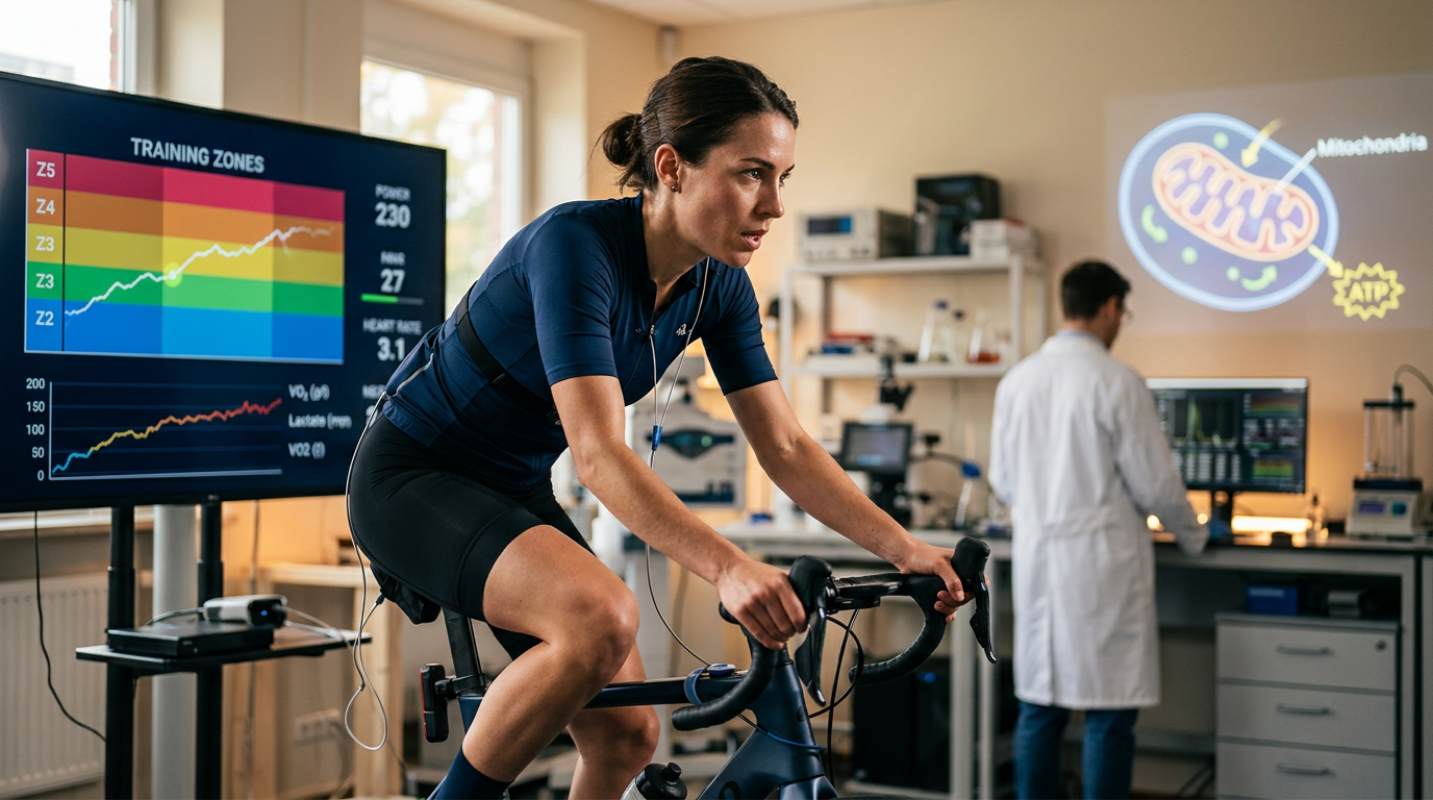
 (Image source: AI)
 You've probably heard the rumor. It’s the one that says once you hit fifty, your body starts a slow, inevitable slide toward the finish line. We’re told to "act our age," which usually means trading in the running shoes for a brisk walk and accepting that our best physical days are firmly in the rearview mirror. But what if that’s just a story we’ve been told to make us feel better about slowing down? The latest data from 2025 and 2026 suggests that your fifties might actually be the decade where you unlock your greatest cardiovascular potential. It isn't about recapturing your youth. It is about building a high-performance engine that can outlast people half your age. At the center of this transformation is one metric: VO2 max.
The Midlife Myth and Why Your Best Fitness Years Aren't Behind You
VO2 max is the gold standard for how well your body uses oxygen. It’s the size of your "engine." In the past, doctors thought a decline in this number was a natural part of aging, like gray hair or wrinkles. We now know that much of that decline is actually "disuse" disguised as "aging."
When you look at the research from late 2025, the findings are startling. For adults over fifty, the single strongest predictor of how long you’ll live (and how well you’ll live) is your cardiorespiratory fitness. Every small increase in your aerobic capacity reduces your risk of dying from almost any cause by about 13 percent.
Think of it like a retirement fund for your physical independence. You aren't just training to run a 5K. You’re training so that in thirty years, you can still carry your own groceries, climb stairs, and play with your grandkids without huffing and puffing. The myth of the "inevitable decline" is being replaced by a science-backed approach to aging that is aggressive, confident, and incredibly effective.
Measuring the Engine and Establishing Your Baseline
You can't improve what you don't measure. In 2026, we have better tools than ever to see exactly where we stand. You don't need to go to a specialized lab and wear a gas mask while running on a treadmill, although that’s still the "pro" way to do it.
Most modern wearables like the latest Garmin or Apple Watch provide a surprisingly accurate estimate of your VO2 max. They track your heart rate and pace during outdoor walks or runs to calculate how efficiently your heart is working. If you want a more "old school" field test, the Cooper Test (seeing how far you can run in 12 minutes) is still a reliable way to get your starting number.
Why does this baseline matter? Because the training for a fifty-year-old with a VO2 max of 30 is very different from the training for someone at 45. Knowing your number allows you to stop guessing. It turns your fitness into a data problem you can solve. Once you have that number, you can see how you compare to your age group and, more importantly, how much room you have to grow.
The Science of Intensity through HIIT and Zone 2 Training
This is where the real breakthroughs happen. For a long time, we thought the heart was the only thing that mattered. But 2025 research has revealed a "peripheral shift." In our fifties, about 44 percent of our fitness limit comes from our muscles and tiny blood vessels rather than just the heart’s pumping power. Our muscles simply get worse at extracting oxygen from the blood.
To fix this, you need a two-pronged attack.
1. The 80/20 Rule
Longevity experts now suggest that 80 percent of your training should be "Zone 2." This is steady-state exercise where you can still hold a conversation but you'd rather not. It’s the "talk test" pace. This builds your mitochondrial base and teaches your body to burn fat efficiently.
2. The Norwegian 4x4
The other 20 percent is where the magic happens. Clinical trials from 2024 and 2025 confirm that High-Intensity Interval Training (HIIT) can reverse mitochondrial decay by up to 69 percent in older adults. The gold standard is the "Norwegian 4x4" protocol. You go hard for four minutes (85 to 95 percent of your max heart rate), followed by three minutes of active recovery. Repeat that four times.
Doing this just once a week has been shown to "de-age" the cardiovascular system by over a decade in just three months. It’s uncomfortable, yes, but the payoff is a 15 to 20 percent improvement in your aerobic capacity.
Recovery as a Performance Multiplier
If you’re training like an athlete in your fifties, you have to recover like one. You can't get away with four hours of sleep and a double espresso anymore. In fact, a landmark 2025 study showed that adults who get less than 8.7 percent of their sleep in the REM stage have a much higher mortality risk.
REM sleep is your metabolic "reset." It’s when your body regulates the "electron leak" in your mitochondria and brings your nervous system back into balance. If you cut your sleep short, your aerobic capacity the next day can drop by nearly 10 percent. Your heart stays in a "stressed" state, which means you aren't actually getting the benefits of that hard HIIT session you did earlier.
Consistency in your sleep-wake cycle is also a game changer. The 2025 "Rhythmic" discovery found that people who exercise in the morning, aligned with their natural circadian rhythm, see significantly higher VO2 max gains than those with erratic schedules. Your body loves a routine. When you sync your hardest efforts with your body’s natural clock and protect your REM sleep, you turn recovery into a performance multiplier.
Staying Consistent for the Long Game
The biggest hurdle isn't the physical pain of a hill sprint. It’s the psychological shift from training for "vanity" to training for "longevity." When you’re twenty, you want to look good at the beach. When you’re fifty, you’re training for your eighty-year-old self.
This shift in perspective actually makes consistency easier. It’s no longer about a temporary diet or a six-week challenge. It’s about building a sustainable habit that fits into your professional life. Maybe that means a 45-minute Zone 2 ride while you take a conference call, or a dedicated "VO2 Max Tuesday" where you push your limits before the rest of the world wakes up.
The data is clear. You have the ability to significantly improve your heart health well into your fifties and beyond. By balancing high-intensity efforts with plenty of easy "base" miles and prioritizing your sleep like a pro, you can achieve a breakthrough that changes the trajectory of your life. You aren't just slowing the decline. You’re actually getting better.
This article on advicehelp.com is for informational and educational purposes only. Readers are encouraged to consult qualified professionals and verify details with official sources before making decisions. This content does not constitute professional advice.