 (Image source: AI)
 If you have been following the bio-hacking scene for a while, you probably remember when peptides were the big thing. They were the gold standard, the ultimate "key" to unlocking your body's potential. Whether it was using BPC-157 to fix a nagging shoulder injury or Ipamorelin to boost your growth hormone, peptides felt like magic. They were specific, targeted, and far more effective than just taking a handful of vitamins. But as we have moved into 2026, the limits of traditional peptide therapy have become a bit more obvious. Peptides are short strings of amino acids that send a single signal to your cells. They tell your body to "do this one thing." Although that is great for simple tasks, it is not always enough for complex tissue repair or systemic aging. You can only send so many single-task signals before the system gets crowded.
That is why we are seeing a massive shift toward exosome therapy. It is the next logical step in our quest for better health and faster recovery. If peptides were the first generation of cellular signaling, exosomes are the high-speed, fiber-optic upgrade. They are not just sending a message, they are delivering the entire manual for repair.
What Exactly Are Exosomes
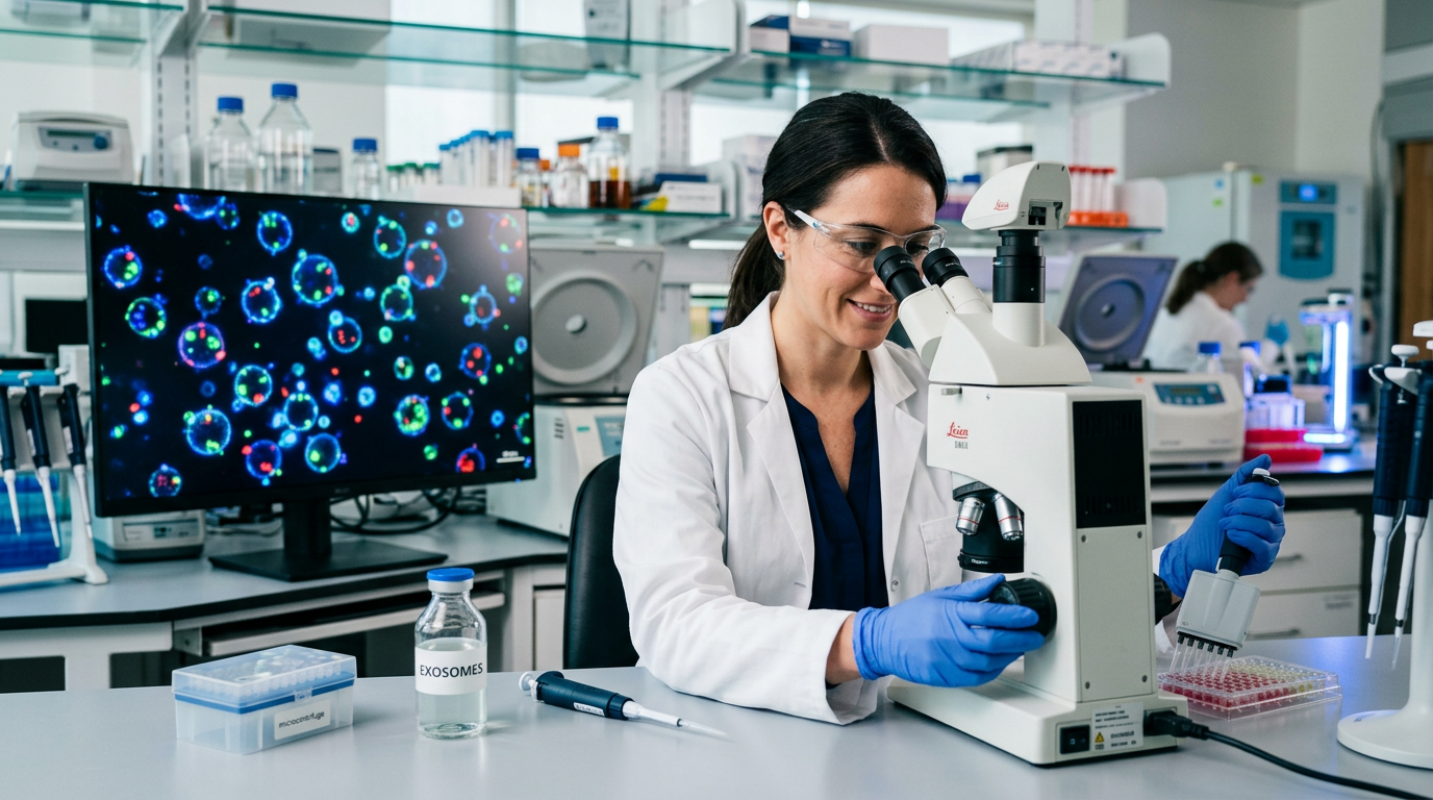
So what does this actually mean for you? Think of an exosome as a biological delivery truck. In scientific terms, they are extracellular vesicles, tiny bubbles ranging from 30 to 150 nanometers in size. Although a peptide is just a single "key" (a chain of amino acids), an exosome is a sophisticated container.
Inside that container, you will find a complex payload of genetic material. We are talking about mRNA, miRNA, proteins, and lipids all packed into one tiny package. This is the big difference between "signaling" and "direct cellular instruction." When a peptide hits a cell, it asks the cell to do something. When an exosome merges with a cell, it actually provides the tools and blueprints the cell needs to get the job done.
It is the difference between texting a contractor to "fix the roof" and actually dropping off a truck full of shingles, tools, and a crew of workers. By 2026, we have realized that for deep, systemic rejuvenation, we need the truck, not just the text message.
Why Exosomes Outperform Conventional Peptides
Why are people making the switch? It mostly comes down to how much more these tiny vesicles can do. Because exosomes carry a multi-modal payload, they can address several problems at once. A single exosome can simultaneously reduce inflammation, trigger collagen production, and promote new blood vessel growth.
Recent clinical data has shown just how much of a gap there is. In studies comparing skin treatments, exosome-based serums were found to be 7.2 times more effective than retinol for reducing wrinkle depth. For stubborn pigmentation, they showed a staggering 17 times greater improvement than traditional active ingredients. That is not just a small step up; it is a total leap in performance.
There is also the convenience factor. If you have ever done a peptide cycle, you know the drill: daily injections, precise timing, and constant refrigeration. Exosomes are different. Because they have such high bioavailability and can integrate so deeply into your system, you don't need to use them every day. Many people are moving toward a "quarterly reset" model where they use high-quality exosome treatments a few times a year rather than pinning themselves every morning.
Clinical Applications and Future Potential
What does the space look like right now? At the 2025 American Academy of Dermatology meeting, experts highlighted that while peptides are great building blocks, exosomes are complete regenerative packages. We are seeing them used for everything from joint recovery to hair restoration.
If you have ever had a laser treatment or a chemical peel, you know the "red face" phase can last for days. New research shows that applying exosomes can cut that recovery time by 50 to 67 percent within just 72 hours. They are even being studied for their ability to cross the blood-brain barrier, which opens up wild possibilities for cognitive health and neuroprotection that peptides just can't match.
Understanding the Future of Bio-Optimization
Before you go all-in, you need to know that this frontier still has some "Wild West" energy. Even in 2026, the FDA has not officially approved exosome products for aesthetic use. They are regulated as biologics, which means they have to go through incredibly strict clinical trials.
There is also a quality issue. Not all exosomes are created equal. Some are derived from stem cells, which can sometimes change their properties during mass production, a problem known as phenotypic drift. Others come from platelets, which many experts currently prefer because they are more stable. You also have to watch out for the "gray market." Recent testing of online peptide sources found that 40 percent of products contained the wrong dose or impurities. You can bet the same risks apply to cheap, unverified exosomes.
The smartest way to look at this is through a hybrid approach. Keep using your peptides for daily metabolic maintenance or muscle repair, but look to exosomes for the heavy lifting. They are the new gold standard for anyone serious about longevity. What matters is adding a power tool to your kit.
This article on advicehelp.com is for informational and educational purposes only. Readers are encouraged to consult qualified professionals and verify details with official sources before making decisions. This content does not constitute professional advice.