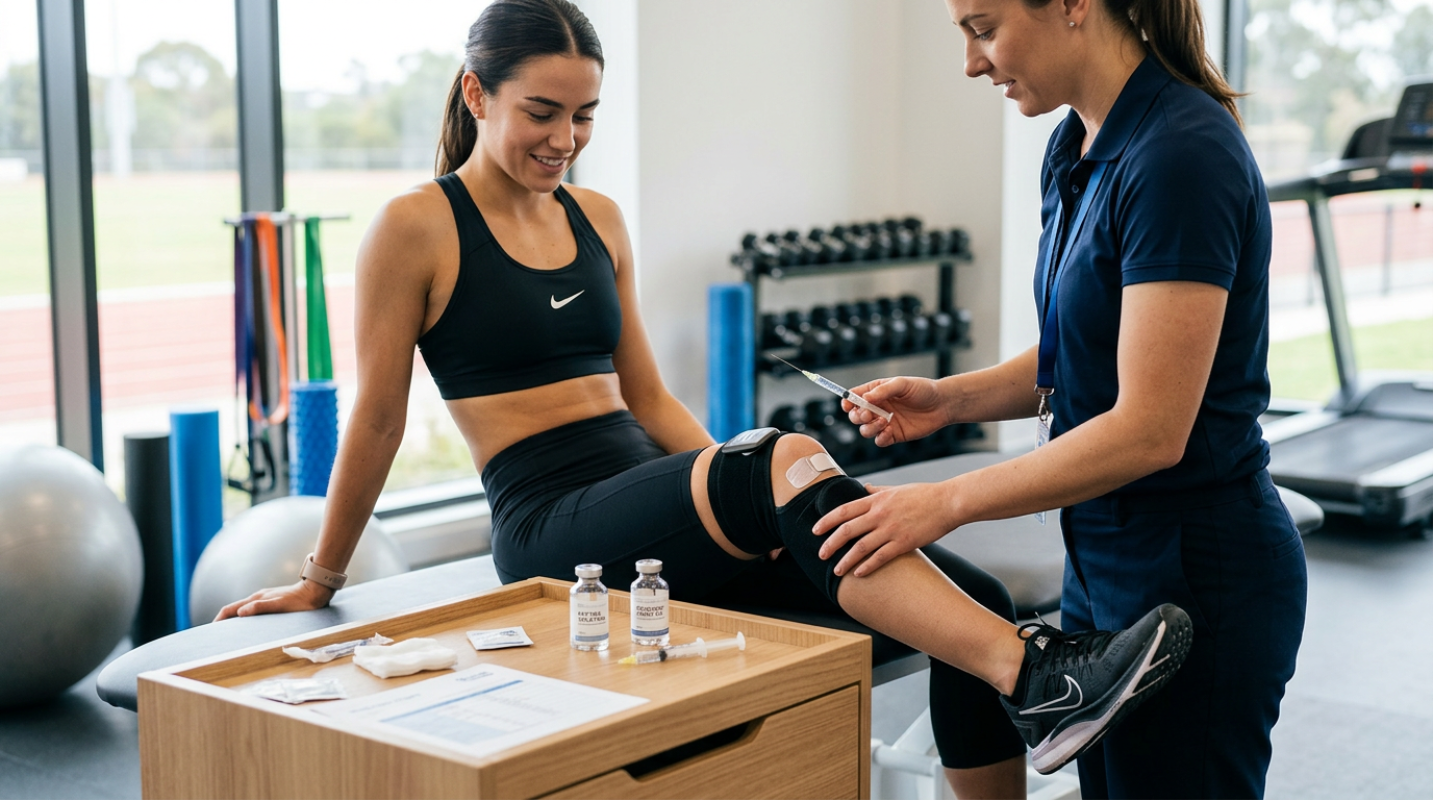
 (Image source: AI)
 Have you ever felt like your body is just taking too long to fix itself? You do the physical therapy, you eat the protein, and you get the sleep, but that nagging tendonitis or muscle tear just won't quit. It’s a common frustration for anyone trying to stay active. For decades, the standard advice was some version of "rest and wait," but we’re finally moving past that. We are entering a new era where we don't just wait for healing to happen. We optimize it. This is where peptides come in. Think of them as the body's internal messaging system. They aren't drugs in the traditional sense. They're short chains of amino acids that tell your cells exactly what to do.
So what does this actually mean for you? It means instead of just hoping your body realizes it needs to fix a ligament, you're sending a high-priority notification directly to the repair crew. It’s a shift from passive recovery to bio-optimized repair, and it’s changing how we look at physical longevity.
The Science of Repair and How Peptides Accelerate Healing
To understand how these molecules work, you have to look at how your body communicates. Your cells are constantly talking to each other. Peptides are the vocabulary. When you get injured, your body naturally produces certain signaling molecules to start the repair process. But sometimes, that signal is weak, or the blood flow to the area is too poor to get the message through.
Peptides like BPC-157 work by upregulating growth hormone receptors and promoting something called angiogenesis. That’s just a fancy word for creating new blood vessels. Why does that matter? Because most stubborn injuries, like those in your tendons or ligaments, suffer from a lack of blood flow. By "turning on" the plumbing in those areas, you're allowing nutrients and repair cells to finally reach the site of the damage.
It's not just about blood flow, though. These molecules also play a huge role in collagen synthesis. Collagen is the literal glue that holds your body together. When you can signal your body to produce more of it, specifically at the site of an injury, the "scaffold" of the tissue regenerates much faster than it would on its own.
Top Peptides for Injury Management in 2026
If you've been looking into this lately, you’ve probably heard of the "Wolverine Stack." It sounds like something out of a comic book, but it’s actually the current gold standard for rapid recovery. This protocol usually combines two specific peptides: BPC-157 and TB-500.
BPC-157, or Body Protection Compound, is often the first thing people try. It was originally discovered in human gastric juice, which might sound strange, but it makes sense when you realize how fast the gut has to repair itself. In recent human trials, it has shown incredible promise. One study from 2025 followed 16 patients with chronic knee pain, and a staggering 87.5% of them reported significant relief after using BPC-157.
Then you have TB-500. Although BPC-157 is great for building the structural "scaffold" of an injury, TB-500 is like the project manager that recruits the workers. It's a synthetic version of a natural protein called Thymosin Beta-4. Its main job is to promote cell migration. It helps move repair cells to the area where they’re needed most and is particularly effective at reducing systemic inflammation.
When you combine them, you get a synergistic effect. BPC-157 handles the localized repair and collagen building, while TB-500 manages the inflammation and cell movement. Most experts suggest a cycle of 4 to 8 weeks, usually involving daily micro-doses of BPC-157 and twice-weekly doses of TB-500.
Integrating Peptides into Your Health Arsenal
At the end of the day, peptides are a tool, not a total solution. They work best when they're part of a larger plan. If you’re using BPC-157 to fix a shoulder injury but you’re still using poor form in the gym and eating a high-inflammation diet, you’re just spinning your wheels.
The real magic happens when you pair these signaling molecules with proven therapies like Platelet-Rich Plasma (PRP) or even high-quality physical therapy. Think of the peptides as the spark that re-ignites a stagnant healing process. Once that fire is lit, you still need to do the work to keep it burning.
Taking control of your physical longevity means being proactive. We don't have to accept that an injury will keep us sidelined for months. By understanding the science of cellular signaling and working with the right professionals, you can significantly reduce your downtime. It’s about more than just getting back to the gym. It’s about making sure your body stays resilient as you age.
This article on advicehelp.com is for informational and educational purposes only. Readers are encouraged to consult qualified professionals and verify details with official sources before making decisions. This content does not constitute professional advice.