 (Image source: AI)
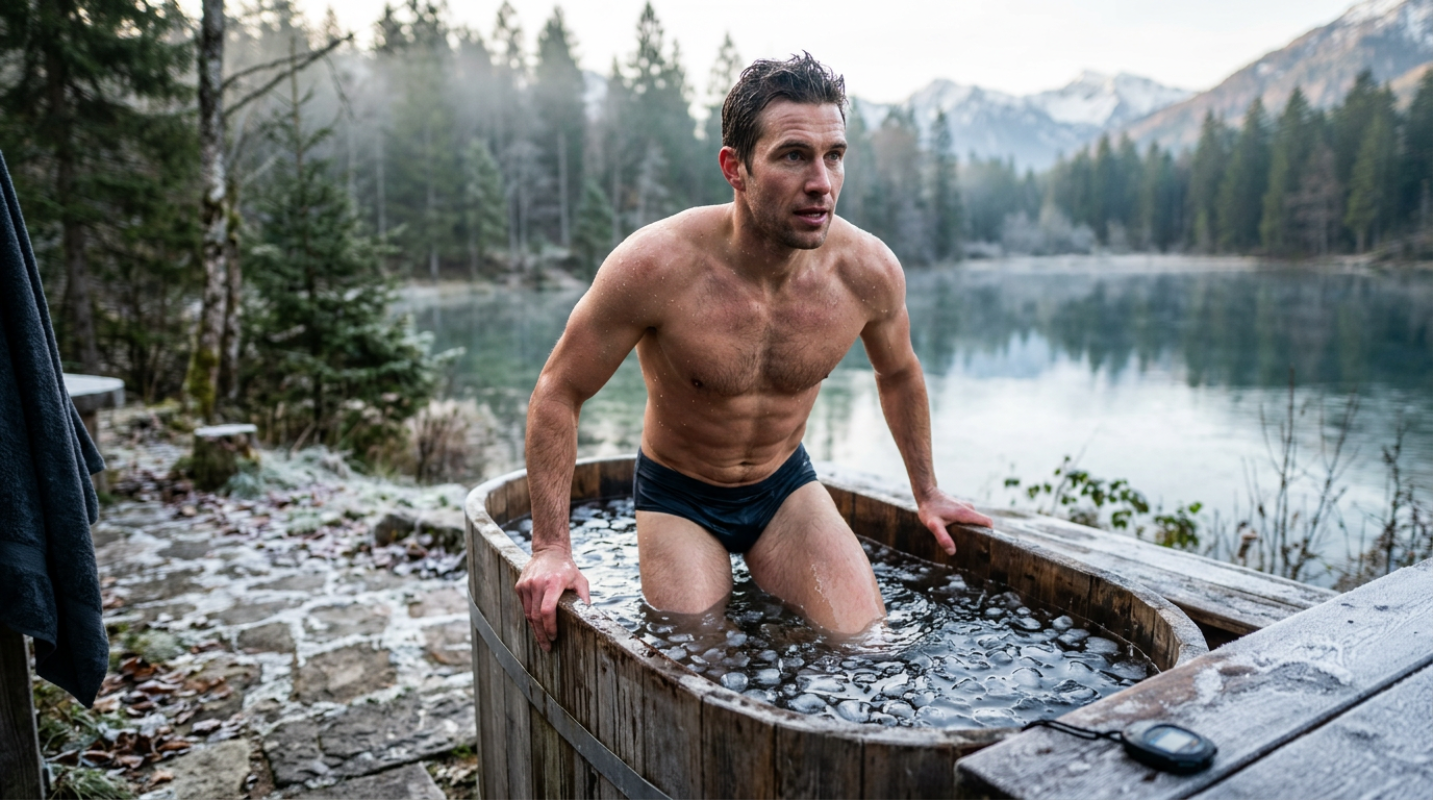
 You’ve likely seen the videos of people stepping into chest-deep ice water with a look of calm determination. It's become the ultimate badge of honor in the wellness world. But if you’re doing it specifically to boost your testosterone, you might be wondering if you’re staying in long enough to see a difference, or if you’re actually freezing your progress away. The conversation around cold exposure has shifted significantly as we move through 2026. We’ve moved past the idea of cold being a simple "on-off" switch for hormones. Instead, we now understand that the relationship between your endocrine system and that freezing tub is a bit more nuanced. It’s not about the immediate shiver, it’s about how your body adapts once you step back out.
The Science of Cold Exposure and Hormonal Health
When you submerge your body in cold water, you trigger a massive physiological stress response. Your heart rate jumps, your breath hitches, and your brain releases a flood of norepinephrine. This is often called hormesis, a fancy way of saying "what doesn't kill you makes you stronger." For a long time, people thought this acute stress might directly signal your testes to pump out more testosterone.
Recent data from 2025 and early 2026 suggests the reality is a bit more interesting. A study by Jana Jaklová Dytrtová, published in Frontiers in Physiology, looked at athletes going through a cold exercise protocol. They didn’t find a massive spike in testosterone right after the plunge. In fact, immediate tests often show a temporary drop.
The real magic happens during what researchers call the delayed adaptive response. In that same study, researchers found a 56% increase in total plasma testosterone, but only after a 7-day recovery period. This means the cold plunge isn't a magic pill you take for instant gains. It’s an investment in your hormonal bank account that pays out dividends about a week later as your body compensates for the stress.
The Sweet Spot How Long Should You Actually Stay In?
So what does this mean for your daily routine? Have you been staying in for ten minutes thinking more is better? If so, you might want to dial it back. The consensus among experts like Dr. Andrew Huberman and Dr. Susanna Søberg has landed on a very specific dose-response relationship.
For most men looking to optimize their hormones, 2 to 5 minutes is the "Goldilocks" zone. This duration is long enough to trigger cold-shock proteins and that key norepinephrine release without sending your body into a state of chronic, depleting stress. If you stay in much longer than 15 minutes, you risk hitting a point of diminishing returns where the cold starts to suppress your endocrine function rather than support it.
The most effective protocol for 2026 is the 11-minute weekly total. You don't have to do it all at once. In fact, it’s better if you don't. Splitting that 11 minutes into three or four sessions of roughly 3 minutes each seems to be the sweet spot for metabolic health and hormonal resilience.
A massive meta-analysis published in PLOS ONE in early 2025 by Cain et al. analyzed over 3,000 participants.⁴ They found that while cold immersion causes a spike in inflammation for the first hour, it triggers a powerful anti-inflammatory rebound about 12 hours later. This 12-hour window is when your cortisol levels drop significantly, creating the perfect environment for testosterone production to thrive.
Beyond Testosterone The Complete Benefits of Cold Plunge
Although you might be focused on your T-levels, the indirect benefits of cold plunging are often what do the heavy lifting for your overall . Think of it like fixing the foundation of a house so the plumbing works better.
• Metabolic Health: Cold exposure activates Brown Adipose Tissue (BAT). This isn't just about burning calories. A 2024 paper in GeroScience noted that BAT activation improves insulin sensitivity. Since high insulin levels are a notorious testosterone killer, anything that makes you more insulin sensitive is a win for your hormones.
• Dopamine and Focus: A plunge can increase your dopamine levels by up to 250%. Unlike the quick spike and crash you get from scrolling social media, this increase is sustained for hours, giving you the drive and focus needed to hit the gym or stay productive at work.
• Thyroid Support: Your body produces T3 and T4 hormones to manage the internal furnace during a plunge. A healthy thyroid is the engine that keeps your entire metabolic and hormonal system running smoothly.
Safety and Execution Optimizing Your Routine
If you want to get the most from the hormonal benefits, timing is everything. This is where many people get it wrong. There is a "No-Go" zone that you need to be aware of.
Do not cold plunge within 4 hours of a resistance training session. Recent reviews have confirmed that cold water blunts the natural post-exercise inflammation that is necessary for muscle growth and satellite cell activation.² If you plunge right after lifting, you're telling your muscles to stop growing, which can indirectly hurt your long-term testosterone potential.
Instead, try plunging in the morning to kickstart your dopamine, or use it as a pre-workout tool. Data from CryoCon 2024 suggested that "pre-cooling" can actually increase your peak muscle output during a workout, potentially leading to a higher testosterone response from the training itself.
Listen to your body. If you’re shivering uncontrollably for an hour after your plunge, you stayed in too long or the water was too cold. The goal is to finish the plunge and let your body rewarm naturally, a method often called the Søberg Principle. This "forced" metabolic rewarming is what makes your endocrine system work the hardest.
The 2026 Protocol for Peak Performance
To wrap this up, the ideal cold plunge routine for testosterone isn't about being the toughest guy in the gym. It’s about being the smartest. You want to trigger a response, not a rescue mission.
1. Aim for a total of 11 minutes per week.
2. Keep individual sessions between 2 and 5 minutes.
3. Keep the temperature between 45°F and 59°F.
4. Avoid plunging for at least 4 to 6 hours after lifting weights.
5. Focus on the 12-hour window after your plunge, as this is when your cortisol drops and your recovery peaks.
Consistency is your best friend here. A three-minute plunge four times a week will do more for your hormonal health than a single 20-minute "ego plunge" once a month. It’s about building a resilient system that can handle stress and bounce back stronger. So, the next time you're standing over that tub of ice, remember: you're not just getting cold, you're recalibrating your entire internal environment for better health and higher performance.
This article on advicehelp.com is for informational and educational purposes only. Readers are encouraged to consult qualified professionals and verify details with official sources before making decisions. This content does not constitute professional advice.